Movie-A-Day #8: A Brief History of Time (1991).
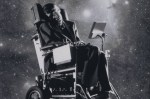 Yesterday we looked at Galileo, the greatest scientist of his age, so today let’s look at perhaps the greatest scientist of own age – Stephen Hawking – who is celebrating his 69th birthday today. His work in theoretical physics has set the tone for most of the cutting edge research on both the astronomical level and the atomic level for the past several decades. Hawking’s research specialties – which include black holes, the Big Bang and the nature of time – can be complex and confusing for the layperson. Luckily documentarian Errol Morris’ great adaptation of Hawking’s book “A Brief History of Time” does a great job of explaining these things in easy-to-understand terms. While the film may be 20 years old by now and, consequently, a little behind the current state of the science, it’s still a good introduction to the world of theoretical cosmology – a world where everything you thought was science fiction may actually be science fact.
The Party (1968).
The Scoop:
I’ll be honest – Blake Edwards has always left me a little cold. Sure, his films can be funny and his sendups of ’60s and ’70s manners added a polite gentility to the cultural anarchy and rebellion of that period. But his gentle jabs are almost too polite and his humor is so slapsticky that his sensibilities seem like a throwback to an earlier generation, even as he’s celebrating the youth revolution.
But “The Party” is one of his better films, thanks in large part to Peter Sellers, whose fine performance gives an understated serenity to the chaos surrounding him.
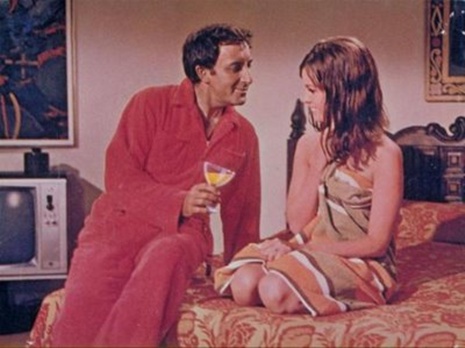
Sellers plays Hrundi Bhakshi, a bumbling Indian actor who ruins the set of his latest film and gets fired, only to find himself accidentally invited to a formal dinner party being thrown by his producer’s wife. All that happens in the first 10 minutes of the film, and that’s it for plot, really. The rest of the film just follows Sellers as he bumbles his way through a series of sight gags and misunderstandings with the other guests. Along the way he gets into all kinds of scrapes and also makes a connection a French ingenue looking to get a big break (the lovely Claudine Longet, who gets to sing a song here).
It’s Sellers who really makes “The Party” worthwhile. Edwards had originally conceived the film as a silent movie and scrapped that idea when Sellers got involved. But Sellers keeps that silent comedy aesthetic at the core of his performance, drawing his inspiration from the grace and heart of Charles Chaplin’s best work. This especially comes through in the adorable chemistry he builds with Longet by the end of the film.
In fact, the end of the film is where all the fun is. It starts off pretty slow and tedious as Edwards has Sellers run through a series of fairly predictable gags that elicit polite smiles rather than genuine laughs. But things really pick up in the third act when a group of Russian dancers and a gang of hippies with an elephant all show up to throw the party completely off the rails. This is where the slow buildup pays off, and it’s also where all of Sellers and Longet’s best scenes are. If you can stick it out that long, you’ll find it to be a party worth attending.
Best Bit:
Hrundi’s little car.
Side Note:
The was the first film to use video playback on the set so that the actors and crew could watch the shots as they were being filmed. Edwards decided to use the system as a way to ensure continuity since the film was almost entirely improvised and shot in sequence. Video playback is now an essential feature of film production.
Companion Viewing:
“Breakfast at Tiffany’s” (1963), “The Pink Panther” (1963) and television’s “Laugh-In.”
Links:
IMDb.
Take a Look:
The trailer:
“Birdie num num”:
Longet sings “Nothing to Lose”:
Movie-A-Day #7: 2001, A Space Odyssey (1968).
 Galileo was a pretty relentlessly curious person. And his sighting of the four largest moons of Jupiter in January 1610 was a monumental turning point in the history of science, which also showed just how too much curiosity could lead to major political trouble. Using a telescope – a new piece of technology – that he built and perfected himself, he spotted the first three moons (Io, Europa and Callisto) on the night of Jan. 7 then found the fourth, Ganymede, on Jan. 13. Besides publicly showing the usefulness of telescopes as scientific instruments and ushering in a new era of astronomy, Galileo was the first European to conclusively prove that not all celestial objects orbit around the earth. It punched a hole in the Catholic Church’s geocentric view of the universe and eventually got him tried at the Inquisition and placed under house arrest for the rest of his life.
As the largest planet in the Solar System, Jupiter continues to fascinate, as do its four vastly different Galilean moons. Europa, in fact, may feature liquid oceans and is one of the extraterrestrial sites astronomers speculate may harbor microbial life. So the gas giant makes an ideal destination for the explorers in “2001: A Space Odyssey.”
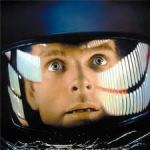
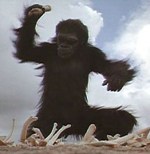 The film, directed by Stanley Kubrick, and the novel, written by Arthur C. Clarke, were developed together and make ideal companion pieces. Clarke and Kubrick are two great storytellers, and together they have created a groundbreaking and deeply philosophical tale of the origins and meaning of life, along with humankind’s difficult relationship with technology, all wrapped up in a tense adventure story. It’s one of my absolute favorite films, and one that rewards plenty of thoughtful revisits. (And geez, just look at how absurdly long the movie’s Wikipedia page is.)
Movie-A-Day #6: The Bloody Pit of Horror (1965).
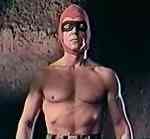 Mickey Hartigay would have been 85 years old today, so let’s give him a birthday shout-out by revisiting his masterwork, “The Bloody Pit of Horror.”
Hartigay was a Hungarian-born bodybuilder who was best known for being Mr. Jayne Mansfield. Their flamboyant eight-year marriage would’ve been a TMZ dream if it had existed then, but out of that marriage came three children, including Mariska Hartigay of “Law and Order: SVU.”
Mickey dabbled in acting a bit, with his most memorable role coming in this movie, an Italian-made sexploitation cheapie. Basically, some clueless fashion models and photographers wander into what they think is an abandoned castle only to be tortured and murdered by the lord of the manor (Hartigay) who fancies himself a reincarnation of someone called the Crimson Executioner. This one’s a must if you like bad movies.
Movie-A-Day #5: The Unbearable Lightness of Being (1988).
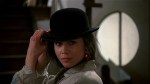 Jan. 5, 1968, marked the beginning of the Prague Spring in Czechoslovakia when political reformer Alexander Dubcek took control of the country and relaxed the oppression of the Communist Party – until the Soviet Union moved in later that year to quash the uprising and re-institute its harsh rule. These few months saw a flowering of free speech, art and political freedoms that may not have lasted long, but which did serve as an inspiration for the citizens of other Communist nations who were finally able to declare independence from Soviet control in the late 1980s and early 1990s.
“The Unbearable Lightness of Being” – based on Milan Kundera’s novel and starring Daniel Day-Lewis, Lena Olin and Juliette Binoche – is the story of a doomed love affair set against the backdrop of the Prague Spring and is wonderfully evocative of that era’s sense of new-found freedom in the shadow of oppression.
And it was wonderfully timed too. Not long after the film’s release, the Soviet empire finally started to crumble, and soon the Czechs and their Eastern European neighbors were finally able to taste real political and personal freedom.
 Desuko Movie Spot.