Rodan (1956).
 The Scoop:
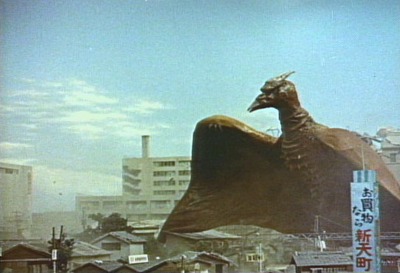
This is Toho’s follow-up to the success of “Godzilla, King of the Monsters” (1954) and “Godzilla Raids Again” (1955), and if you can get past the endless stock footage of nuclear testing at the beginning, you’re home free.
Well, almost. From there, you have to contend with the lead character’s ridiculous, film noir-esque voice-over narration and a much delayed appearance of the monster (a giant winged thing that stomps on stuff, pretty much just like in every other Toho monster movie). Even by the cheesy low standards of vintage kaiju flicks, this one is pretty tepid. But on the plus side, among the American voice over cast is George (“Mr. Sulu”) Takei in his first professional acting job.
Best Line:
“If this thing you call Rodan is extinct, why is it still alive?”
Side Note:
This was Toho’s first full-color monster movie.
Companion Viewing:
Any other Godzilla film.
Take a Look:
The American trailer:
Rodan hatches:
RKO 281 (1999).
The Scoop:
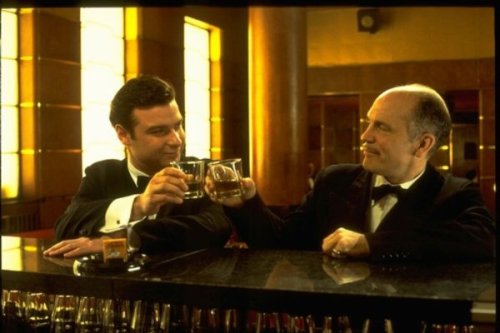
This HBO original, which won a Golden Globe for Best Television Movie, tells the behind-the-scene stories of Orson Welles’ crusade to make “Citizen Kane.” (RKO 281 was the production number assigned to “Citizen Kane” by the studio.) Although it is a little on the short side at just over 80 minutes and rushes through many of the details, it features several great performances and offers an engaging look at the friendship between Welles and Herman J. Mankiewicz.
Liev Schrieber gives a surprisingly good performance as Welles, John Malkovich is up to his usual schtick as Mankiewicz, and Marion Davies is another one of those bimbo roles Melanie Griffith was born to play. And even though James Cromwell’s interpretation of William Randolph Hearst borders on Don Corleone territory, it isn’t distracting.
Most importantly, this film makes the point that “Citizen Kane” was as much about Welles himself as it was about Hearst. Director Benjamin Ross and writer John Logan highlight many of the contradictory foibles — both his storytelling genius and his self-destructive arrogance — that would make Welles a major figure in film history, but would also eventually ruin him creatively.
Best Line:
“It is not my life you sabotaged with your movie, Mr. Welles. My battle with the world is almost over. Yours, I’m afraid, is just begun.”
Side Note:
Based on the documentary “The Battle Over Citizen Kane” (1996).
Companion Viewing:
“Citizen Kane” (1941).
Links:
IMDb.
Logan’s script.
Take a Look:
Welles and Bernard Herrmann (Kerry Shale) tackle the score:
Welles and Mankewicz discuss Heart’s involvement in the death of director Thomas Ince (followed by scenes from “The Cat’s Meow,” a film about the Ince case):
The Bloody Pit of Horror (a.k.a., The Crimson Executioner) (1965).
 The Scoop:
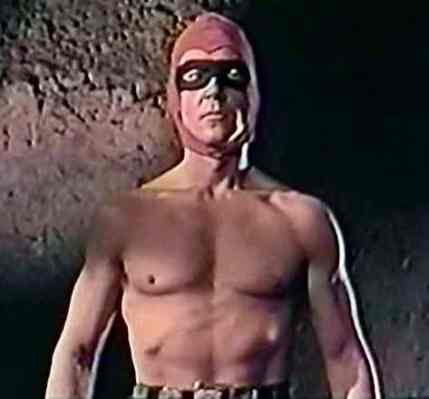
In this bargain basement Italian production, a group of models, photographers and assorted hangers-on visit an old castle for a photo shoot, only to run into the demented owner who thinks he’s possessed by the spirit of the Crimson Executioner, a 17th century torturer.
Despite the poor acting and technical incompetence, this is charming in its own sleazy way and is most notable for the presence of Mickey (Mr. Jayne Mansfield) Hargitay, who plays the owner. He camps it up big time, and the camera obviously loves his oiled-up body. He’s the highlight of the movie, although the torture and titillation, which are very tame by today’s standards, hold a certain cheesy charm on their own terms.
Don’t you dare call yourself a bad movie lover if you haven’t seen this one yet.
Best Line:
“Mankind is made up of inferior creatures, spiritually and physically deformed, who would have corrupted the harmony of my perfect body.”
Side Note:
Hartigay won the Mr. Universe title in 1955 and followed that up with a string of B-movies, including “Hercules vs. the Hydra” and “Lady Frankenstein.” His rocky six-year marriage to Mansfield was tabloid fodder throughout the late 1950s and early 1960s,, and their daughter Mariska Hartigay has won both an Emmy and a Golden Globe for starring in “Law and Order: Special Victims Unit.”
Companion Viewing:
“Baron Blood” (1972) and “Lady Frankenstein” (1971).
Links:
IMDb.
Cool Cinema Trash.
Images Journal.
Take a Look:
The trailer:
Mickey chews some scenery:
Zero Hour! (1957).
 The Scoop:
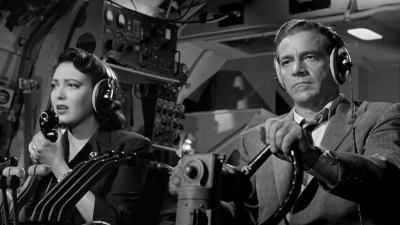
Stop me if you’ve heard this one before — a cross-country flight is put in peril when the entire crew and several passengers get sick with food poisoning and it’s up to shaky, battle-scarred former fighter pilot Ted Styker to land the plane with a little help from a tough-as-nails pilot on the ground.
This is better known as the plot of “Airplane!” but the Zucker-Abrahams-Zucker team didn’t think it up themselves. While their film was a spoof of ’70s disaster movies like the “Airport” series, they lifted their plot, characters, and even whole scenes and chunks of dialogue, wholesale from “Zero Hour!”
Dana Andrews plays Stryker, a decorated Canadian World War II pilot whose post-traumatic stress disorder keeps him out of the air until he’s forced to board a cross-country flight to keep his wife (Linda Darnell) from leaving him. Naturally, the fog gets thick and the fish is bad, so Stryker winds up in the cockpit and it’s up to Capt. Treleaven (Sterling Hayden, channeling Jack Webb) to talk him through it.
ZAZ skewered this thing so thoroughly that it’s hard to watch it seriously now. But on its own, its a taut little thriller that’s marred slightly by hamminess and some unintentional humor. Still a load of fun, though.
Best Bit:
The ventriloquist act, which belongs in a ZAZ movie.
Side Note:
The pilot is played NFL Hall-of-Famer Elroy “Crazylegs” Hirsch.
Companion Viewing:
“Airplane!” (1980), of course.
Links:
IMDb.
A transcript annotated with notes on what was later used in “Airplane!”
Take a Look:
The trailer:
A side-by-side comparison of “Zero Hour!” and “Airplane!”:
The House Bunny (2008).
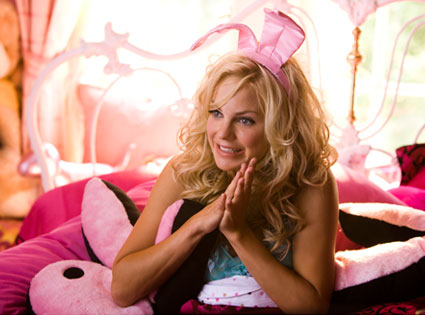 The Scoop:
In “The House Bunny,” Anna Faris is great as a Playboy bunny turned sorority house mother, but the rest of the film needs a lot of help.
Faris plays Shelley, an aspiring centerfold who gets kicked out of the Playboy Mansion and is taken in as a house mother by the nerdy, awkward sisters of Zeta Alpha Zeta. She helps them have their sorority house by giving them makeovers and making them popular, while they show her that there’s more to life than being an airheaded nude model.
The script from Karen McCullah Lutz and Kirsten Smith (based on an idea by Faris) has plenty of good one-liners, but the beyond that it is clunky and filled with just about every cliche you can imagine. There are some good performances, particularly from Faris, Emma Stone and Kat Denning. But they can’t outweigh the wooden presence of Hugh Hefner (as himself, of course) and Tyson Ritter (the lead singer of All-American Rejects). Nor can it outweigh the fact that no film with a PG-13 rating is able to get to the truly good material to be found in either sorority houses or the Playboy Mansion. And let’s not get into the questionable gender politics.
In fact, “The House Bunny” feels less like a contemporary story and more like a throwback to the popular comedies of 30 years ago. (It’s no coincidence that the sorority’s name is abbreviated ZAZ.) But unfortunately it falls just a bit short of being worthy of their company. Yet it is a little fluffy, mindless fun for a rainy day of movie watching — if you can get past the premise that a woman’s highest goal should be to meet a guy.
Best Line:
“Do you know where the crapper is? I have to do a very mysterious thing in there.”
Side Note:
Celebrity offspring alert! Tom Hanks’ boy Colin plays Shelley’s love interest, Oliver, and Rumer Willis (daughter of Bruce Willis and Demi Moore) plays Joanne, the Zeta girl who won’t give up her back brace.
Companion Viewing:
“National Lampoon’s Animal House” (1978) and “Clueless” (1995).
Links:
IMDb.
Official site.
Missives From Marx.
Take a Look:
The trailer:
“American Idol” star Katherine McPhee (who also plays Zeta girl Harmony) leads her costars in singing the sadly non-ironic theme song:
 Desuko Movie Spot.