Frankenstein Island (1981).
The Scoop:
From the cinematic genius of Jerry Warren – the mind that brought us “The Wild World of Batwoman” and “Teenage Zombies” – comes the goofy turd that is “Frankenstein Island.” For this, the last film of his career, Warren eschews the schlock, nudity and gore that had come to dominate low budget B-movies in the 1970s and 1980s in favor of the kind of genial incompetence that flooded the drive-ins a generation earlier.
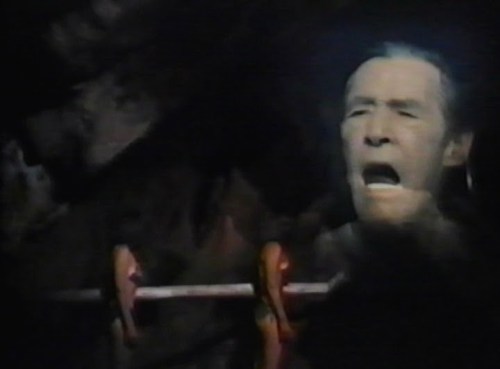
The plot, in which four survivors of a hot air ballooning accident (and their dog) wash up on an uncharted island and meet a mad scientist, owes more to “The Island of Dr. Moreau” or “The Most Dangerous Game” than it does to anything associated with the Frankenstein mythos. The island is run by a woman who descended from the original Dr. Frankenstein, but her poorly defined experiments don’t seem to have much connection to her ancestor’s work. Instead, we get some Amazon women in bikinis, a Poe-quoting prisoner (a slumming Cameron Mitchell), lots of idiot henchmen and the disembodied floating head of John Carradine (in a role that he almost literally phones in).
Nothing much of consequence happens, especially during the first half hour when our survivors just wander from one odd group of characters to the next. Even when the action picks up, it still doesn’t make a whole lot of sense. There is a lot of dreary incompetence broken up by the occasional flash of sheer ridiculousness. The only excitement comes in guessing when Carradine’s next surprise appearance will come. His role consists solely of spouting nonsensical proclamations about a golden thread, like a lightweight version of Bela Lugosi’s turn in “Glen or Glenda.” It’s pointless, but it keeps things entertaining until everything climaxes in a wacky lab fight.
Warren’s work in “Frankenstein Island” is a throwback to bargain basement cinema of Ed Wood, Coleman Francis and Robert Lippert. Goofy, incompetent fun.
Best Line:
“It’s when you mix the particular place, not here, but on the outside, well, that’s when the power hits ya!”
Side Note:
Warren’s previous film, “The Wild World of Batwoman,” drew a lawsuit from DC Comics, who owned the rights to the Batman franchise. The resulting legal battle kept Warren out of the film business for 15 years.
Companion Viewing:
“The Wild World of Batwoman” (1966) “Island of Lost Souls (1932) and “Mysterious Island” (1961).
Links:
IMDb.
Take a Look:
When in doubt, quote Poe:
Warrenesque lunacy at its finest:
Movie-A-Day #56: The Concert for Bangladesh (1971).
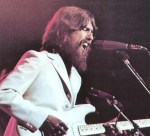 George Harrison made his name as The Quiet Beatle, but he was a lot more than just merely shy. He was a deeply spiritual and compassionate humanitarian who not only introduced these themes into his songs, but who also put those values into action. In the early 1970s, the fledgling nation of Bangladesh was a mess with political turmoil and a bloody civil war. These problems were compounded by a massive cyclone that killed at least half a million people and left the nation’s infrastructure in ruins. So Harrison organized “The Concert for Bangladesh,” a live show supplemented by a film and soundtrack album designed to raise money for UNICEF to help the country right itself. It was a star-studded event that created the template for the decades of celebrity humanitarianism that followed. Harrison would have been 68 today.
Movie-A-Day #55: 1941 (1979).
 The events of the night of Feb. 24, 1942, have gone down as a footnote in history as the Battle of Los Angeles. And, no, it had nothing to do with the forthcoming big budget movie of the same name. Instead, it had less to do with aliens and more to do with the West Coast’s post-Pearl Harbor jitters.
Less than three months after the Japanese bombed Hawaii, folks in Southern California were still on edge wondering if there would be another attack on American soil. Air raid and blackout precautions were in full effect and plenty of people kept their eyes on the skies in case something happened. Then finally on Feb. 24, something did happen. Lights appeared in the night sky over Long Beach and Santa Monica, prompting anti-aircraft fire from artillery units on the ground. This prompted other citizens on the ground to open fire as well, sending a panic throughout the Los Angeles area. By the time order was restored at dawn on Feb. 25, more than 1,400 shells had been fired, several buildings had been damaged, and six people were dead, either from friendly fire or from panic induced heart attacks. Yet nothing was shot down and there was no trace of whatever it was that had been seen overhead. Nobody knew for sure what they saw up there. Rumors ranged from Japanese fighter planes to innocent American aircraft to UFOs. Military officials didn’t say much at the time, and the matter wasn’t officially laid to rest until 1983 when the Air Force finally issued a report attributing the confusion to a stray weather balloon.
The Battle of Los Angeles was perhaps the most dramatic of a handful of similar incidents that occurred up and down the West Coast immediately after Pearl Harbor. All of which inspired “1941,” Steven Spielberg’s somewhat misguided attempt at a big budget epic comedy. It’s an interesting, oddball slice of L.A. history that probably deserves a better telling than what Spielberg gave it.
Movie-A-Day #54: Ulee’s Gold (1997).
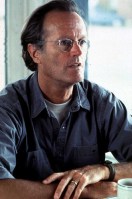 Peter Fonda, who turns 71 today, is a terrific actor and an icon of ’60s counterculture cinema. But he is also uncompromising and makes idiosyncratic career choices, which has given him a career that has been spottier than most of his contemporaries’ work. After a string a great films in the late 1960s and early 1970s, he seemingly disappeared, only find a career resurgence in the 1990s wave of indie cinema. “Ulee’s Gold” – in which he plays a timid beekeeper trying to keep his dysfunctional family together – is one of the best of his later roles.
Movie-A-Day #53: The Clonus Horror (1979).
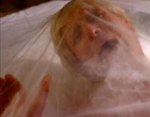 On this day in 1999, a group of scientists in Scotland announced that they had successfully cloned an adult sheep named Dolly. It was groundbreaking science, and suddenly what had once seemed like sci-fi fantasy became reality. “The Clonus Horror” comes from the days when cinematic cloning wasn’t real, just really bad. Human cloning is a serious ethical issue, but sadly there have not been any (decent) serious treatments of it on film.
 Desuko Movie Spot.