The Crowd (1928).
(No, Desuko’s summer hiatus isn’t over yet, but I just thought I’d toss up another review to let you all know this site hasn’t disappeared altogether. Expect the regular update schedule to resume in mid-July. In the meantime…)
 The Scoop:
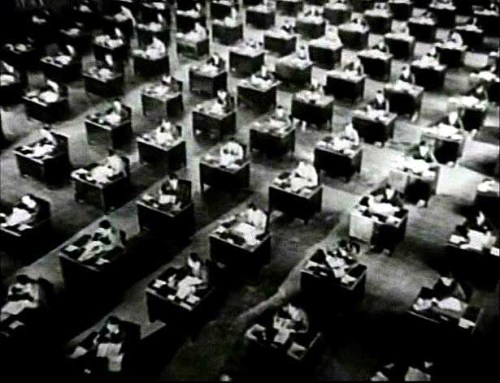
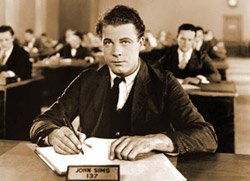
Writer/director King Vidor’s masterpiece is one of the unheralded classics of the silent era. The story follows a young man (played by the appropriately anonymous James Murray, who never had another starring role) who goes to New York to make his name, only to find tragedy as a faceless member of “the crowd,” that teeming mass of striving humanity that populates any large city.
The film shows the influence of the German expressionist movement of the time, not just in its visual style, but also in its theme of humanity being warped and crushed by the industrialism of the modern age. But this pathos is interlaced with touches of humor and presented with a visual creativity that’s rarely been matched.
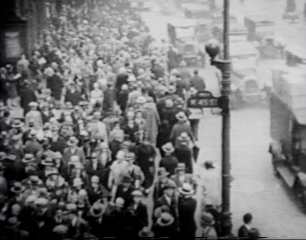
To capture the authentic look and feel of the streets of the big city, Vidor shot on location and went to great lengths to hide the cameras from passersby. There is even one shot of a policeman hassling Vidor and his crew to “move along,” which was kept in the film for effect.
“The Crowd” is a real treat, and should be one of the first stops for any exploration of the silent era.
Best Bit:
The camera going down the giant slide at Coney Island.
Side Note:
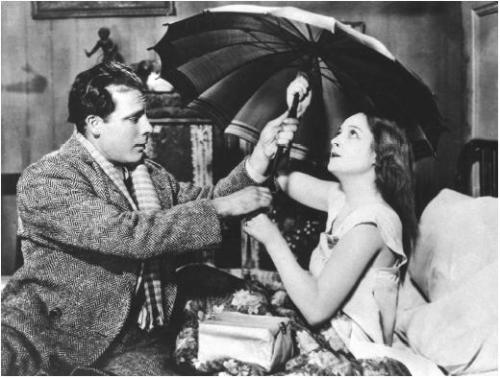
Production dragged on so long that costar Eleanor Boardman had enough time to get pregnant and deliver her child, all before shooting wrapped.
Companion Viewing:
“Greed” (1924), “Metropolis” (1926) and “Brazil” (1985).
Links:
IMDb.
Take a Look:
Apparently there are no clips available online, so here are some stills to give you an idea…
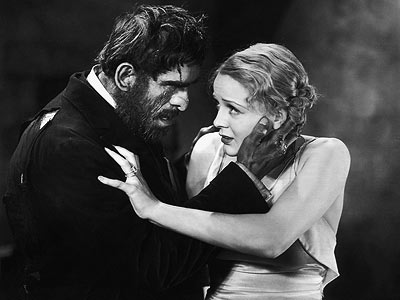
The Old Dark House (1932).
 The Scoop:
Although he’s remembered mainly for “Frankenstein” (1931), this is the essential James Whale film. Given more creative freedom, he made a film full of eccentric humor, moments of poignant tenderness, creepy sexuality and a few subversive touches.
The plot, from the J.B. Priestley novel “Benighted,” is a cliché by now — a group of travellers are forced to take shelter from a storm in a remote mansion full of sinister goings-on. Whale and the cast have great fun tweaking the conventions, although many of the more dysfunctional aspects of the family living in the mansion are glossed over in deference to the Production Code. (But the hints are still there, if you look for them.)
The cast, all in tip-top shape, includes Boris Karloff, Charles Laughton, Melvin Douglas, Raymond Massey and Gloria Stuart (a full 66 years before her Oscar-nominated performance in “Titanic”). This film is one of those rare treasures that doesn’t deserve its obscurity.
Best Line:
“No beds! They can’t have any beds!”
Side Note:
The family’s patriarch, 102-year-old Sir Roderick Femm, was actually played by a woman, Elspeth Dudgeon. She was billed as John Dudgeon to get her gender bending past the censors.
Companion Viewing:
“The Cat and the Canary” (1927) and “The Rocky Horror Picture Show” (1976).
Links:
IMDb.
Take a Look:
“Laughter and sin! LAUGHTER AND SIN!”
Norma Jean and Marilyn (1996).
 The Scoop:
A great script anchors this HBO original movie about the life and death of Marilyn Monroe. The gimmick that works unusually well is having two leads play the same character — Ashley Judd as Norma Jean Baker, the ambitious, sexually abused orphan, who transforms herself into Mira Sorvino as Marilyn Monroe, the troubled sex symbol who can’t escape Norma Jean’s inner voice.
The film does a good job chronicling her drug use and the way she exploited men and sexual politics to rise to the top, but ignores many of the rumors and speculation that surround her death. Both actresses give strong performances, but Judd’s is especially captivating. I absolutely fell in love with her in this movie — and not just because she spends a great deal of time nude. This is one of my favorite Hollywood biopics — right up there with “The Man of a Thousand Faces” (1956), “Chaplin” (1992) and “Ed Wood” (1996).
Best Line:
“I’m going to be in the movies, even if I have to fuck Bela Lugosi to do it!”
Side Note:
Judd and Sorvino both shared Emmy and Golden Globe nominations for lead acting.
Companion Viewing:
“Gia” (1998).
Links:
IMDb.
Take a Look:
For reasons only know to the creator, someone made a short montage of some of Ashley Judd’s cigarette smoking scenes from the film:
I Was a Male War Bride (1949).
 The Scoop:
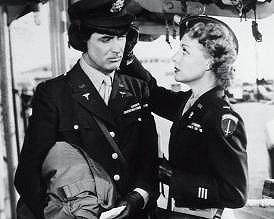
One of the truisms of comedy is that nothing guarantees a hearty laugh quite like seeing men wearing women’s clothing. It long ago became a cliché, but each generation still manages to produce performers and performances that pull it off and give it a fresh spin.
While Howard Hawks’ “I Was a Male War Bride” sticks to the cheap laughs inherent in cross-dressing, it keeps it to a minimum and more than makes up for it in other ways. The incomparable Cary Grant works his usual charm on a script that examines a little-known historical curiosity following the second World War — the military offered special help to American GIs who met women in Europe or Asia and wanted to marry them and bring them to the United States. However, the cases of American military women who wanted to bring home husbands were overlooked. This movie fully exploits the comic possibilities inherent in this situation. Grant is a French army officer (based on the travails of the real life Henri Rochard, who gets story credit here) who plans on marrying American officer Ann Sheridan. Unfortunately, the apparatus set up to benefit military spouses isn’t prepared to handle husbands. So, Grant must become a war bride instead. This is a hilarious film, and one of Grant’s better performances.
Best Line:
“The process of turning a man into a woman is enormously complicated — but I’ll do my best.”
Side Note:
After Sheridan’s luggage was lost during her trip to Europe to begin shooting, a group of military wives pitched in to give her new clothes. They were repaid by being cast as extras.
Companion Viewing:
“Ball of Fire” (1941) and “Bringing Up Baby” (1938).
Links:
IMDb.
Take a Look:
This clip doesn’t involve cross-dressing, and it’s one of the lamer gags in the movie, but it’s online, so here ya go…
 Desuko Movie Spot.