Forgotten Silver (1995).
 The Scoop:
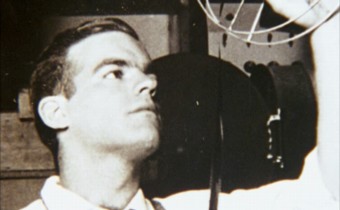
Between making “Heavenly Creatures” and “The Frighteners,” Peter Jackson teamed up with buddy Costa Botes to take a detour with this project, a mockumentary made for New Zealand television about a fictional pioneer filmmaker.
With loads of wry, bone-dry humor, Jackson and Botes tell the story of native New Zealander Colin MacKenzie, who during the silent era was the real inventor of a whole slew of cinematic tricks, including tracking shots, close-ups, color photography and even sound. After the completion of his troubled epic “Salome” (which Jackson and Botes “restore”), MacKenzie disappears into obscurity and is killed in the Spanish Civil War, only to have his forgotten work discovered decomposing in the shed belonging to a neighbor of Jackson’s mother.
Celebrity interviewees like Leonard Maltin, Harvey Weinstein and Sam Neill are in on the joke as well, although most of the viewing public apparently was not. After the film was revealed to be fictional following its successful premiere on TVNZ, a huge public outcry ensued (all of which is carefully detailed in the “Behind the Bull” featurette on the DVD).
Jackson and Botes went to great lengths to make the historic footage look authentic, and it pays off as an intelligent, loving ode to the filmmaking of the period.
Best Bit:
The sordid story behind MacKenzie’s experiments in making color film.
Side Note:
The vintage photographs of MacKenzie and his brother Brook are actually doctored versions of photos from the Botes family album, specifically Botes’ grandfather and great uncle.
Companion Viewing:
“Zelig” (1983).
Links:
IMDb.
Take a Look:
Just a brief snippet detailing the end of MacKenzie’s collaboration with silent comedian “Stan the Man,” in which Stan gets his comeuppance for years of terrorizing innocent passers-by with his Borat-style ambush humor:
Rollerball (1975).
The Scoop:
In the future, everyone will still be stuck in the ’70s.
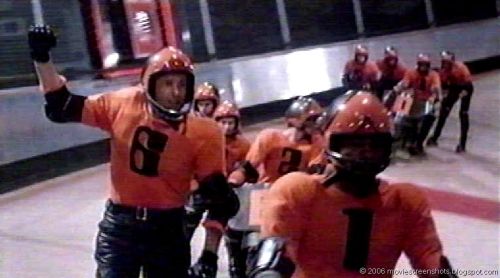
That’s the real lesson learned from watching this horribly dated movie, which purports to make a serious statement about the growing commercialization and corporatization of sports and world culture. While the film has some important points to make — which are even more valid today than when it was made — they are all lost in the torrent of garish production design (check out the font on those uniforms!) and bad acting.
In the far distant year 2018, multinational corporations have replaced countries and all world conflict has been channeled into the ultraviolent sport of rollerball. James Caan is a superstar rollerball player who rebels when he is forced to retire by his corporation. Director Norman Jewison tries to class up the proceedings with appearances by John Houseman and Sir Ralph Richardson, and even achieves a few good moments. But mostly it’s short on character, long on roller skating and polyester.
Best Line:
“They have muscles! They bash in faces!”
Side Note:
John Box won a British Academy Award for his horrible, dated art direction.
Companion Viewing:
Complete your marathon of cheesy, dated ’70s “futuristic” sci-fi with viewings of “Logan’s Run” (1976) and “Zardoz” (1973).
Links:
IMDb.
Scoopy’s Movie House.
Take a Look:
A trailer:
Queen Kelly (1929).
 The Scoop:
Produced by star Gloria Swanson and her paramour Joseph Kennedy, this film really belongs to the extravagant director Erich von Stroheim, who imbued this routine romantic melodrama with his usual opulent and perverse excesses. The result is another of von Stroheim’s unfinished masterpieces — truncated, yet with just enough of his genius intact to tantalize the viewer with what might have been.
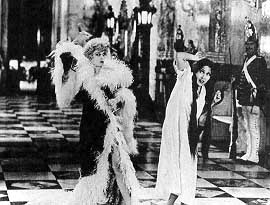
Swanson plays the title character, a poor waif whose love affair with a dallying prince (Walter Byron) earns her the wrath of the princess (Seena Owen, who, in the most famous scene, whips Kelly before throwing her out of the palace) and personal struggles in the African jungle. The story is strictly formula for the period, and the only reason to watch it today is for von Stroheim’s signature direction.
Unhappy with his work and far overbudget, Swanson fired von Stroheim before the film was finished and, although it was finished later by famed cinematographer Gregg Toland, it was not released in the U.S. until the 1950s. It was such an expensive boondoggle that it effectively ended both Swanson’s and von Stroheim’s careers in Hollywood (not that the director needed any further help with that by this point).
Best Bit:
The S&M fire of the whipping scene.
Side Note:
Years later, Swanson made her comeback in “Sunset Boulevard” (1950) as a vain former silent movie star and was able to convince director Billy Wilder to cast von Stroheim in the role of her character’s former director turned chauffeur. As if those real-life parallels for the two weren’t enough, clips of “Queen Kelly” are used as one of the films the characters had made together.
Companion Viewing:
“The Merry Widow” (1925).
Links:
IMDb.
Take a Look:
There’s a lengthy (but frustratingly unembeddable) clip here, which includes the whipping scene.
Batman: The Movie (1966).
[Holy hiatus! Desuko is back! Look for regular twice-weekly updates from here on in.]
 The Scoop:
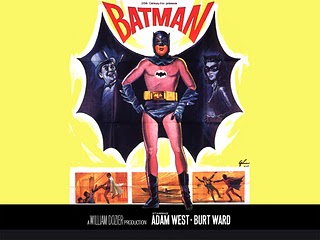
This feature length spinoff of the great ’60s TV show hits all the right notes, capitalizing on what the series did so well — enthusiastic performances, farcical humor and healthy doses of convention-tweaking.
The action-packed story has the dynamic duo (Adam West and Burt Ward) tangling with the United Underworld, which boasts the combined forces of Catwoman (Lee Meriwether), the Penguin (Burgess Meredith), the Joker (Cesar Romero) and the Riddler (Frank Gorshin). The foursome hatch a plot to take over the world by using a stolen dehydrator to kidnap the United World Security Council. Leslie Martinson’s well-paced direction keeps up with Lorenzo Semple Jr.’s breakneck script to keep the gags, fisticuffs and ridiculous situations flying.
The performances are uniformly energetic, too. West does his usual poor-man’s-Shatner bit here, but it’s used well. Of particular note, though, are Meriwether’s slinky turn as Catwoman and Gorshin’s definitive take on the Riddler (sufficiently manic without being annoying).
There’s great fun to be had here, miles away from the dark brooding that has become the standard mode for the character since Tim Burton’s 1989 revival.
Best Bit:
Batman’s call to the Pentagon to inquire about war surplus submarines. (“We haven’t done anything foolish, have we?”)
Side Note:
This was originally planned to be the pilot for the TV series, but when the production was rescheduled to take place between the first and second seasons, original Catwoman Julie Newmar found herself committed to another project, which allowed Lee Meriwether to get the role.
Companion Viewing:
The TV series, of course, but also “Batman” (1989) which provides an instructive contrast.
Links:
IMDb.
Official site of the DVD release.
Hollywood Teen Movies.
An exhaustive fan site.
Take a Look:
First, the trailer. “Holy superlatives, Batman!”
“Hand me down the Shark Repellant Bat Spray!”
“Some days, you can’t get rid of a bomb!”
 Desuko Movie Spot.