Something Wild (1986).
 The Scoop:
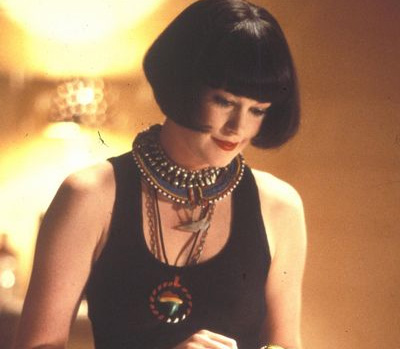
This entry in the curious ’80s subgenre of staightlaced-guys-swept-up-by-wild-dames-in-New-York-City (which includes “Who’s That Girl?”, “Desperately Seeking Susan,” “After Hours” and others) comes out on the top of the heap, mostly because of the irreverent directorial touch of Jonathan Demme and the fun performances of Melanie Griffith (whose character Lulu is obviously based on Louise Brooks’ character in “Pandora’s Box”) and Jeff Daniels.
Daniels plays Charles Driggs, a conservative businessman content with his boring life, who accepts Lulu’s offer for a ride back to his office. Of course, wacky Lulu has other plans and whisks Charles away for a wild weekend, including a trip to her high school reunion. But when they cross paths with her violent ex-con ex-husband (Ray Liotta), Charles’ life is suddenly in danger.
The pace is fast and fun, even if the third act gets serious and drags a little bit. Everything up to then is slam-bang, though, and also helping the film succeed is the hipness quotient, which includes songs by David Byrne; a score by John Cale and Laurie Anderson; and cameos by John Waters, John Sayles and the Feelies.
Best Bit:
“Sure, I’m a rebel. I just channeled my rebellion into the mainstream.”
Side Note:
The two little old ladies in the clothing store are played by the mothers of David Byrne and Jonathan Demme.
Companion Viewing:
“After Hours” (1985) and “Pandora’s Box” (1929).
Links:
IMDb.
Take a Look:
No trailers available online, but at least you get John Waters, being all cool and John Waters-ish:
Rio Bravo (1959).
 The Scoop:
John Wayne has become such an icon of American machismo that it can be hard to approach any of his movies objectively now. Most of them are just vehicles for his raging testosterone, anyway. But there are a few keepers in the bunch, and this is one of them.
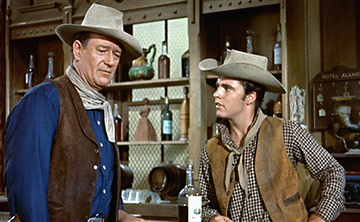
Here, he’s a small town sheriff who must hold off a vicious gang who are trying to break one of their members out of jail. His only help are the town drunk (Dean Martin), an inexperienced kid (Ricky Nelson) and a crippled old-timer (Walter Brennan). There’s a good story, taut pacing, some comedy and plenty of suspense. Wayne even tones down his swagger and lets his costars (which include Angie Dickinson, Ward Bond and Pedro Gonzalez Gonzalez) have plenty of room to do their thing. The only misstep is a studio-ordered musical interlude for Martin and Nelson, but that’s easy to overlook.
Another triumph from director Howard Hawks, this film grabs you from the very first, wordless scene and doesn’t let go.
Best Line:
“Let’s make some noise, Colorado!” (Quentin Tarantino has often cited “Rio Bravo” as one of his favorite films. It’s such a favorite, in fact, that he borrowed this line for his original script for “Natural Born Killers,” and it’s one of the few bits of his dialogue that survived the Oliver Stone rewriting machine to make it into the finished film.)
Side Note:
Although it’s a western, the script was cowritten by legendary sci-fi author Leigh Brackett, whose other movie credits include “The Empire Strikes Back” (1980) and “The Big Sleep” (1946).
Companion Viewing:
“High Noon” (1952).
Links:
IMDb.
Take a Look:
The trailer:
Walter Brennan cracks ’em up:
That darn song (which, for the record, is “My Rifle, My Pony and Me”):
Rock ‘n’ Roll High School (1979).
 The Scoop:
The Ramones were at their creative peak for only a few years short years in the mid- to late-’70s before commencing a quick slide into self-parody and irrelevance in the ’80s. But in that short time, their impact was almost incalculable. They practically invented the American strain of punk rock (a few predecessors notwithstanding) by stripping away the 20 years’ worth of artifice and mannerisms that had accumulated around rock music and returning it to its simple 1950s rebel roots, albeit with more threatening modern undertones. In short, by getting back to basics they launched a revolution.
And, in an odd way, “Rock ‘n’ Roll High School” is the best record of that revolution.
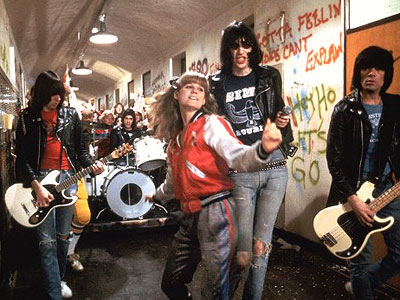
The film, one of scholckmeister producer Roger Corman’s best, distills the best parts of formulaic 1950s rock ‘n’ roll youth movies into a fun, high energy B-movie classic. Part of that energy comes from the Ramones, whose best songs blanket the soundtrack. But part of it also comes from the charming performance of P.J. Soles, who plays Riff Randell, the die-hard fan who will do anything to attend the upcoming Ramones concert and meet her idols. Also along for the ride are Clint Howard (at his best as the teenage svengali Eaglebauer, absolutely a character for the ages), Vincent Van Patten and B-movie stalwarts Paul Bartel, Mary Woronov and Dick Miller.
So much about rebellious, youth-oriented rock ‘n’ roll is ephemeral — even the greatest bands shine bright for only a short time before they become routine and establishmentarian. This film captures that brief moment in the Ramones’ career perfectly.
Best Line:
“Things sure have changed since we got kicked out of high school.”
Side Note:
The Ramones got the part only after a number of other acts turned it down, including Devo, Van Halen, Cheap Trick and Todd Rundgren.
Another Side Note:
Uncredited contributions abound in this movie. Director Allan Arkush got unbilled assistance from both Joe (“Gremlins”) Dante and Jerry (“Airplane!”) Zucker. Meanwhile, among the rockin’ high school kids are Germs lead singer Darby Crash and legendary stunt performers Debbie Evans and Jack Gill.
Companion Viewing:
“Rock Around the Clock” (1956) and “Grease” (1978).
Links:
IMDb.
Take a Look:
The trailer:
The Ramones’ video for the theme song:
The Girls on the Beach (1965).
 The Scoop:
The girls are all right!
With most of the country mired in the depths of winter right now, what better time to dream of some summertime fun? And that’s something “The Girls on the Beach” definitely delivers.
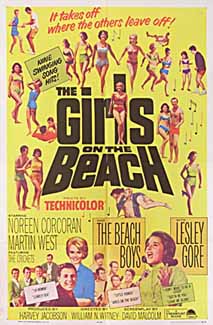
In this typical (but more fun than most) ’60s teen comedy, a group of randy sorority sisters band together to put on a show that will raise money to save their beach house. It’s all strictly a “Beach Party” knockoff, but who cares? It may not be terribly original, with lots of subplots that go nowhere, but it’s all done with an infectious sense of fun. Among the ensemble of bikini-clad stars is Noreen Cochran (“Bachelor Father”), Lori Saunders (“Petticoat Junction”), Mary Mitchel (“Spider Baby”) and Lana Wood (Natalie’s sister, best known as Plenty O’Toole in the James Bond film “Diamonds Are Forever”).
The music is great, with appearances by the Beach Boys (featuring the on-the-verge-of-his-breakdown Brian Wilson looking totally out of his element), Leslie Gore and the Crickets.
This is just the thing to put you in the mood for spring break.
Best Line:
“We want you to seize his enormous brain with your enormous assets.”
Side Note:
Costar Nancy Spry was Miss Teen U.S.A.
Companion Viewing:
“Beach Party” (1963) and any of its string of sequels and imitators.
Links:
IMDb.
Take a Look:
The trailer:
Freaks (1932).
The Scoop:
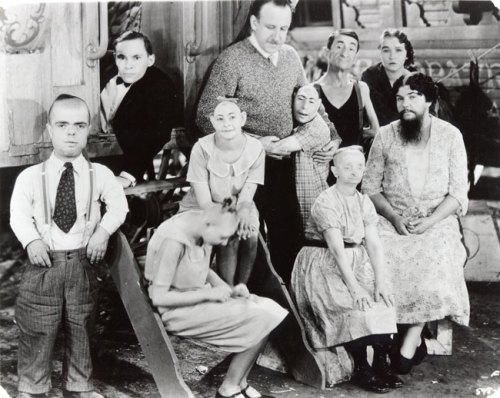
Like the carnival denizens it features, this movie — the creative pinnacle of director Tod Browning’s career — was reviled and disowned by the system that spawned it.
Browning was an American original, growing up in the circus to become a sideshow huckster. That experience served him well as he made the jump into the wild filmmaking world of the early silent era. He eventually teamed up with makeup master Lon Chaney to make a series of gruesome and perverse classics, such as “The Unholy Three” (1925), “The Unknown” (1927) and “London After Midnight” (1927).
In 1931 he was assigned to direct Bela Lugosi in “Dracula,” which became a runaway success, firmly establishing the horror genre in the United States and single-handedly saving Universal from bankruptcy at the height of the Depression. With that success under his belt, Browning was given his choice of projects, so he chose something close to his heart — a story about the circus side show freaks he spent much of his childhood around. Although it was driven with a promotional campaign that emphasized the stars’ deformities (alternate titles included “The Monster Show” and “Nature’s Mistakes”), the film is actually a humane exploration of their plight in a world that hates and exploits them just because of the way they were born, and starred real-life sideshow performers.
Harry Earles is the midget Hans, who acts as the informal leader of a close-knit group of freaks and sideshow performers in a traveling circus. When a beautiful trapeze artist (Olga Baclanova) discovers that Hans has an inheritance that has made him absurdly rich, she and her strongman boyfriend (Henry Victor) plot to steal Hans away from his midget fiancée (who is strangely enough played by Daisy Earles, Harry’s sister) to get the money. This, of course, draws the ire of the freaks, setting up the classic final scenes.
Despite being somewhat stagey and running short (mostly due to cuts enforced by the studio and the Hays Office), the film maintains a menacing, macabre undertone that can still shock today.
Universal executives kept the project at arm’s length and, after their initial release obligations, quickly buried it. It existed as a nearly-forgotten cult film (and was completely banned in the United Kingdom) until its long-overdue revival in the ’60s, after Browning’s death. Now considered a classic, it effectively ended Browning’s career (although his growing alcoholism playing a big hand in that, too.)
Best Line:
“One of us! One of us! We accept you! One of us!”
Side Note:
Although for most of the freaks this was their only movie appearance, Johnny Eck (“The Half-Boy”) also appeared in two Tarzan movies and an episode of “The Beverly Hillbillies.”
Companion Viewing:
“The Unknown” (1927), “Chained for Life” (1958) and the photographs of Diane Arbus.
Links:
IMDb.
The screenplay.
Trivia quiz.
Take a Look:
Some backstage shenanigans:
“Gobble gobble!”:
 Desuko Movie Spot.