The Serpent and the Rainbow (1988).
The Scoop:
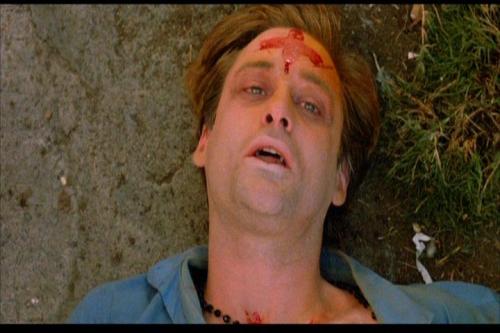
Hollywood just can’t make good voodoo movies. With one lone exception (Val Lewton’s wonderful “I Walked With a Zombie”), they all just come off as contrived and hokey. “The Serpent and the Rainbow” is no different.
This stab at voodoo credibility is a bunch of zombie silliness that Bill Pullman would probably rather leave off his resume. He plays Dennis Allen, a research scientist who travels to Haiti for a pharmaceutical company to investigate a drug that may create zombies. Before long, he gets caught up in a web of intrigue, sex, hallucinogens and bad acting. It was directed by the otherwise talented Wes Craven, who is clearly working outside of his comfort zone a bit and straining from the effort. The film is a very loose adaptation of the book by Wade Davis, which in turn was based on an allegedly true story.
“The Serpent and the Rainbow” actually has a pretty vocal legion of devoted fans, but it’s kind of hard to see what the fuss is all about. This pile of voodoo hoodoo tries to be mystical and creepy, but instead is just horrible. If this thing was being made today, you just know Nicolas Cage would be starring in it. Stay far away.
Best Line:
“Don’t let them bury me! I’m not dead!”
Side Note:
Avant garde singer Diamanda Galas makes an uncredited appearance as one of the voices of the dead.
Companion Viewing:
“Voodoo Woman” (1957).
Links:
IMDb.
Take a Look:
The trailer:
Queen of Outer Space (1958).
 The Scoop:
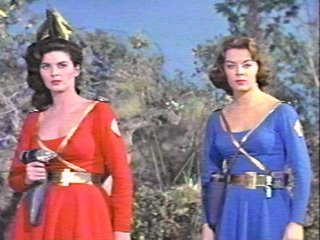
Can a society ruled entirely by women still be misogynistic? It can when it comes to hilarious ’50s sci-fi.
The first manned expedition to Venus crash lands, and the three thoroughly condescending men aboard (Eric Fleming, Dave Willock, Patrick Waltz) find themselves captive in a miniskirted all-woman society ruled by Queen Yllana (Laurie Mitchell), who has a severe hatred for men (turns out it’s all their fault she’s not pretty anymore) and wants to destroy the Earth. Zsa Zsa Gabor is on hand to camp it up as Talleah, the planet’s chief scientist, but even she is not immune to the charms of our three space studs and helps them escape. Who needs a career when you can marry the first guy to come along?
Like a beer commercial fantasy stretched out to 80 minutes, the supporting cast is populated by a slew of beauty queens who look great but act horribly. The production design in great, though — the epitome of what you’d expect from 1950s cardboard movie cheese. It’s all just a goofy, campy hoot.
Best Line:
“Why don’t you girls knock off all this Gestapo stuff and try to be a little friendly.”
Side Note:
Most of the costumes are recycled from “Forbidden Planet” (1956) while many of the models and effects are taken from “World Without End” (1956) and “Paris Playboys” (1954).
Companion Viewing:
“Fire Maidens of Outer Space” (1956), “Cat Women of the Moon” (1953) and “Vegas in Space” (1991).
Links:
IMDb.
Jabootu’s Bad Movie Dimension.
3B Theater.
Take a Look:
The trailer:
Zsa Zsa really hates that queen:
Monster on the Campus (1958).
The Scoop:
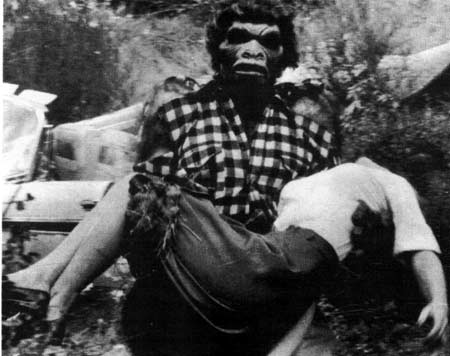
Looked at the right way, this mishmash from director Jack Arnold can be seen as a template for early Marvel Comics. College science professor Dr. Donald Blake (a name that was later used as the secret identity of the Mighty Thor) gets injured while examining a gamma-irradiated coelocanth and turns into a creature on a kill-crazy rampage (just one step away from the Hulk’s backstory).
Trying to picture the film that way is just about the only way to get through it, because you certainly can’t take it seriously. Besides Arthur Franz (who plays Blake), the cast includes Joanna Moore, Judson Pratt, Nancy Walters, teen heartthrob Troy Donahue and the ubiquitous Whit Bissell.
“Monster on the Campus” was produced by Universal in an attempt to compete at the drive-ins with AIP and the other teen-centric B-grade studios. And when a major tries to stoop to compete with the little guys on their own terms, the results are almost never good. In this case, the effects are bad, the monster is more hilarious than terrifying and the plot holes are enormous — which is enough to make this a campy B-movie delight.
Best Bit:
This wonderfully witty exchange:
“Did you know your dog’s a throwback?”
“A throwback? He’s a German Shepherd!”
Side Note:
The silly looking monster makeup was designed by Bud Westmore, who had a long career in Hollywood working on much better fare, including “The Incredible Shrinking Man” (1957), “The Andromeda Strain” (1971), “Soylent Green” (1973) and the “Dragnet” television series.
Companion Viewing:
“I Was a Teenage Werewolf” (1957), which gets this formula right.
Links:
IMDb.
Hollywood Teen Movies.
Take a Look:
The trailer:
The Lively Set (1964).
 The Scoop:
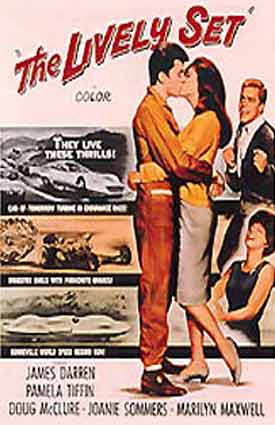
This descendant of the ’50s road racing movies plays more like a beach party film on wheels, right down to the casting of Frankie Avalon and Annette Funicello look-alikes James Darren and Pamela Tiffin. There’s some wacky comedy, a little music, and lots of innocent flirtation between the boys and the girls — with the action transplanted from the beach to the race track.
The movie’s primary purpose seems to be to spread the good news about Chrysler’s then-new Turbine Car, which promised to be the wave of the future (and we all know how well that turned out). Here’s the plot, not that it matters: Casey (Darren) and his buddy Chuck (Doug McClure) are whiz kid mechanics who are hired by snobby playboy Stanford (Peter Mann) to build a super-fast car for the Big Race. Casey and Chuck come up with a jet car powered by a turbine engine of their own design (played by the Chrysler engine), but when a test run fails, Stanford fires them. So, they fix up the engine and use it to race against Stanford in the Big Race. Meanwhile Chuck’s sister Eadie (Tiffin) hangs around and makes google eyes at Casey.
This film also features appearances by racing stars, such as Mickey Thompson and Bill Krause. There are worse places to find mindless fun, I suppose…
Best Bit:
Casey’s recitation of drag racing rules as foreplay. What’s more, it works.
Side Note:
One song, “Look at Me,” was written by Oscar-winning composer Randy Newman and another, “Boss Barracuda,” is performed by the Surfaris — both feature lead vocals by future game show host Wink Martindale.
Companion Viewing:
“The Roadracers” (1959) and the original “Speed Racer” TV cartoon series.
Links:
IMDb.
Imperial After Dark.
Turbine Car User.
Take a Look:
Want to buy this guy’s copy of the DVD?
Helter Skelter (1976).
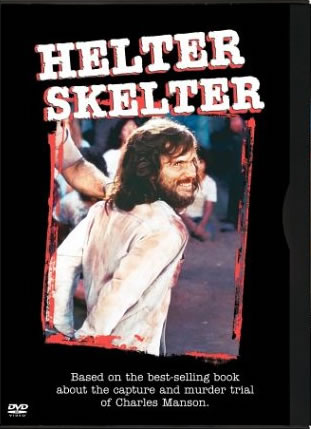 The Scoop:
The original adaptation of Vincent Bugliosi’s book about prosecuting members of the Manson Family for the Tate-LaBianca murders of 1969 goes light on the crime and heavy on the investigation.
Originally a TV miniseries, part one details the gathering of evidence in the wake of the murders, and part two covers the trial. Not only is it incredibly self-serving to Bugliosi (played by George DiCenzo), but the voice-over narration of passages from the book make this sound as stiff as an episode of “Dragnet.” And, even worse, second rate cover versions (by the band Silverspoon) are used instead of the original Beatles songs that fueled Manson’s bizarre philosophy.
But on the plus side, Steve Railsbeck gives a definitive performance as Charles Manson. That alone makes it still worth a look after all these years.
Best Bit:
During a courtroom sidebar, Bugliosi stops the proceedings to remind the defense attorney how to pronounce his name: “No, the ‘G’ is silent. It’s pronounced ‘Boo-lee-oh-see.'”
Side Note:
The LaBianca murder sequence was shot on location at the crime scene, in the actual LaBianca house.
Companion Viewing:
“In Cold Blood” (1967).
Links:
IMDb.
CharlieManson.com.
Book excerpt.
Take a Look:
A TV promo:
Railsbeck delivers Manson’s courtroom speech:
 Desuko Movie Spot.