The Wizard of Oz (1925).
 The Scoop:
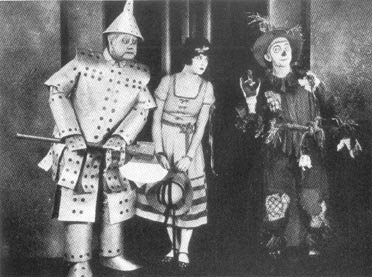
It is best to check your expectations at the door with this silent screen adaptation of L. Frank Baum’s novel. It is a very different creature than the classic Judy Garland version.
What it is, mainly, is a vanity project for popular silent film comedian Larry Semon. Not only did he star in the film as the Scarecrow, but he also directed and co-wrote (along with L. Frank Baum Jr. and Leon Lee). The result strays pretty far from both the novel and the 1939 film. There are no witches, no yellow brick road, no Muchkins, and no Toto. What plot is left is minimal — Dorothy, who was born the princess of Oz and sent to Kansas as an infant (for reasons that are never adequately explained), is whisked off to her homeland with some friends (who merely dress up in the familiar parts of the Scarecrow, Tin Woodsman and Cowardly Lion) and reclaims her throne with only token opposition.
The rest of the film’s running time is filled, essentially, with Semon’s ego, rendered in the form of seemingly endless, unfunny pratfall sequences and long, loving close-ups of Dorothy (played by his wife, Dorothy Dwan). The physical comedy is, frankly, a product of its time and, as such, does not hold up well today. It is well performed, particularly by Semon and the young, up-and-coming Oliver Hardy (as the Tin Woodsman), but isn’t very inventive. Especially when compared to the work of Semon’s contemporaries, Buster Keaton and Charles Chaplin.
And then there’s the Cowardly Lion, played as a mincing charicature by African-American actor Spencer Bell, who is also given the unfortunate screen name of G. Howe Black.
It is sad to say, but an evening watching this movie is just not time well spent.
Best Line:
“In spring, the young man’s fancy turns to — lollipops.”
Side Note:
The androgynous Phantom of the Basket is played by Frederick Ko Vert, a well-known drag performer of the time. He had a handful of similar film roles throughout the 1920s, and also designed the costumes for “The Wizard of Oz.”
Companion Viewing:
“The Wizard of Oz” (1939).
Take a Look:
An abridged version of the first half of the film:
The Amazing Colossal Man (1957).
 The Scoop:
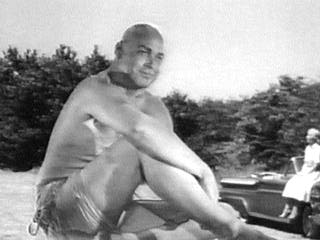
This is yet another crappy Bert I. Gordon special effects spectacular about oversized terrors.
The colossal man in question of army officer Glenn Manning (Glenn Lanagan), who accidentally gets caught in a nuclear explosion, which causes him to become 65 feet tall and surly. He loses his mind and goes on a rampage through downtown Las Vegas, only to be killed in a fall from the Hoover Dam. Or so it seems, because he eventually returns for a sequel, “The War of the Colossal Beast.”
This film is respected in some circles, but don’t believe them. It’s only good for a laugh.
Best Line:
“How many sins must a man commit in a single lifetime?”
Side Note:
Contrary to the scientific explanation given for Manning’s growth, the human heart is actually made up of millions of cells, not just one.
Companion Viewing:
“The War of the Colossal Beast” (1958).
Links:
IMDb.
1,000 Misspent Hours.
Take a Look:
The scientists try to inject Glenn with a giant hypodermic needle. Watch the hilarity (and bad FX) ensue:
Love is News (1937).
The Scoop:
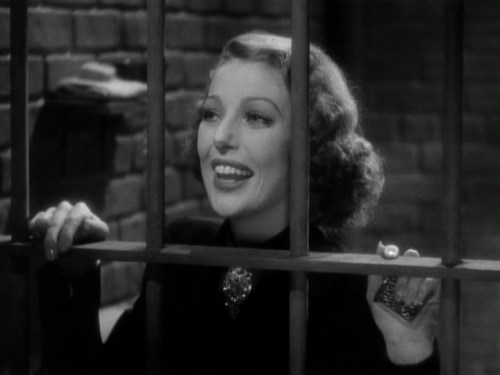
The screwball comedy featuring the fast-talking reporter and the madcap heiress was a genre that was done to the death in the 1930s, and unfortunately “Love is News” was one of the murder suspects.
Maybe I’m being a little too hard on this movie, since its heart seems to be in the right place, and it does have its amusing moments. In fact, it’s mostly charming. But there are also a lot of bland screwball clichés on parade, as well as a needlessly convoluted plot.
The story, in a nutshell, involves a cynical, amoral newspaper man (Tyrone Power) who scams his way into an exclusive interview with a celebrity heiress (Loretta Young), who in turn gets back at him by starting a media frenzy by saying they are engaged. This upends the reporter’s life and he must tangle with his cantankerous editor (Don Ameche), the heiress’ ex-fiancé (George Sanders) and a whole host of cloying stock characters to set the record straight, before true love finally wins out in the end.
“Love is News” was not the best screwball comedy produced in the era, but it was also far from being the worst. Power and Young have a good chemistry on screen, but they were no Hepburn/Tracy or Grant/Russell. This film had the potential to be a whole lot better, but just wasn’t. In all, it’s a good light entertainment, but not the place you want to start in exploring the screwball comedy genre.
Best Bit:
Either the booze checkers game, or the George Sanders photo flipbook.
Side Note:
Director Tay Garnett must have gotten on famously with Young. This was the first of three films they made together, and he also later directed several episodes of her TV show.
Companion Viewing:
“His Girl Friday” (1941), “Woman of the Year” (1942) and “Bringing Up Baby” (1938).
Links:
IMDb.
Laura’s Miscellaneous Musings.
Take a Look:
The bickering lovebirds square off against the cranky country judge (Slim Summerville):
 Desuko Movie Spot.